
INTERNATIONAL FLIGHTS
Plan with the club.
Contact the club about international flights and check current requirements before flying.
Contact the club ↗FOR VISITING PILOTS
EKSA · Sæby / Ottestrup. All the practical information for your visit in one place.
EKSA / AIRFIELD INFORMATION
Check current AIM, NOTAMs and airfield conditions. This information does not replace official flight planning.
Open Naviair AIM ↗• Radio frequency: 122.505 MHz
• Airfield position: N57º 20.8 E010º 24.4”
• Elevation: 112 ft MSL
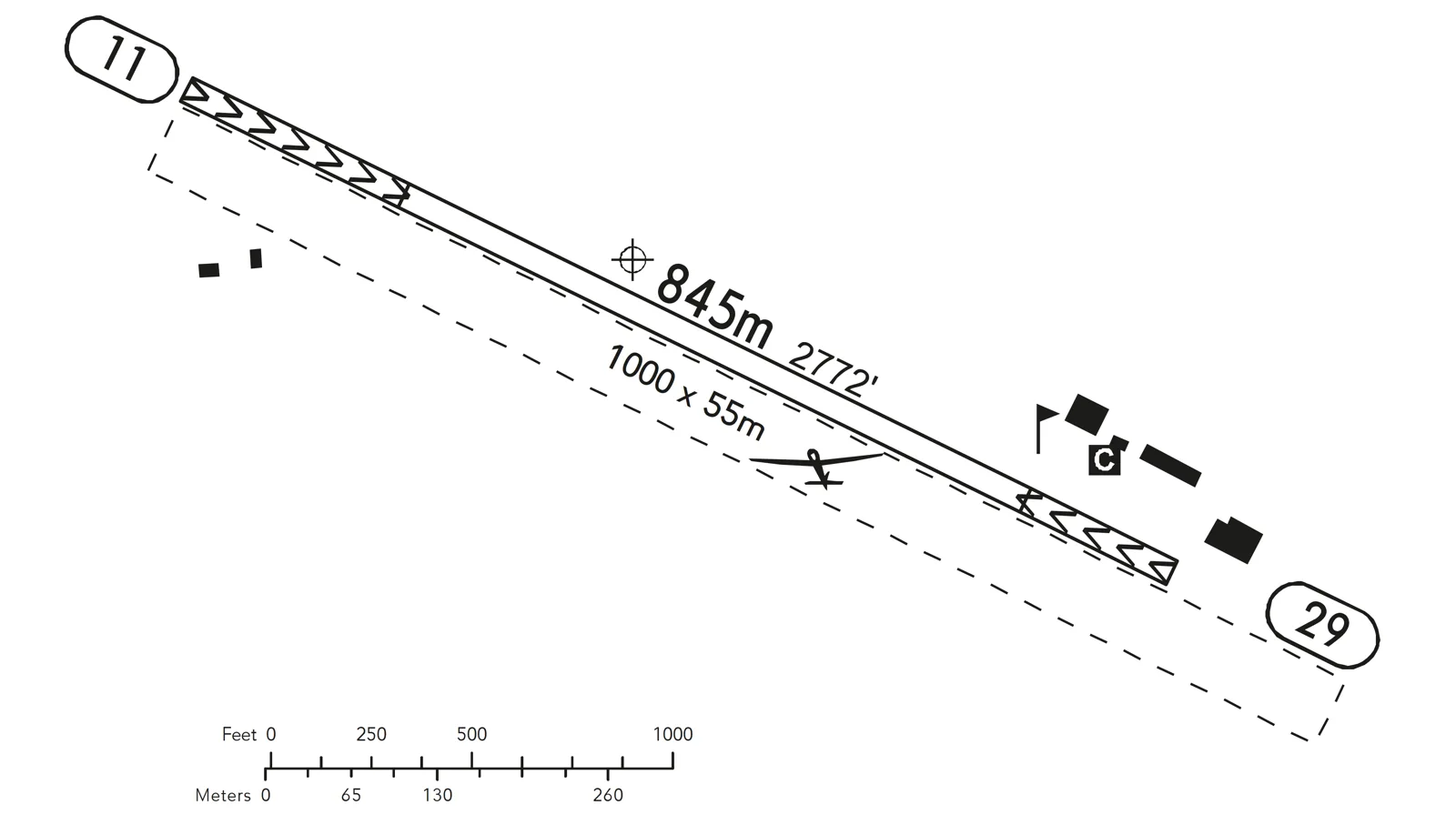
• Runway direction: 11/29
• Powered-aircraft grass runway: 845 × 20 m
Runway 11: LDA 659 m / TORA 720 m
Runway 11: 20° right turn to 130° immediately after departure
Runway 29: LDA 720 m / TORA 659 m
Runway 29: 20° left turn to 270° immediately after departure
• Traffic circuits:
Powered aircraft north of the runway
Gliders south of the runway
• Opening hours: SR–SS, self-service. PPR for VFR night operations
• Fuel: no fuel is available for purchase at the airfield.
Nearest airfields with AVGAS 100LL:
EKSN (Sindal – 11nm)
' EKYT (Aalborg - 24nm).
• Hangar space: available on request.
• Landing fee: DKK 50 / MobilePay 77043 (include aircraft registration)
• Courtesy car: may be available — contact +45 21756426
.
For further information or details of runway conditions,
call +45 21756426 or +45 28449938
The Danish AIM is available on Naviair’s website.
Naviair Briefing information: +45 32478272
Naviair Briefing — close a flight plan: +45 32462338

INTERNATIONAL FLIGHTS
Contact the club about international flights and check current requirements before flying.
Contact the club ↗FACILITIES
No fuel at the airfield. Hangar space and a courtesy car may be available by arrangement.
Call +45 21 75 64 26 ↗PLEASE CONSIDER OUR NEIGHBOURS
20° right turn to 130° immediately after departure.
Powered aircraft fly circuits north of the runway. Gliders fly south of the runway.
View the departure chart ↗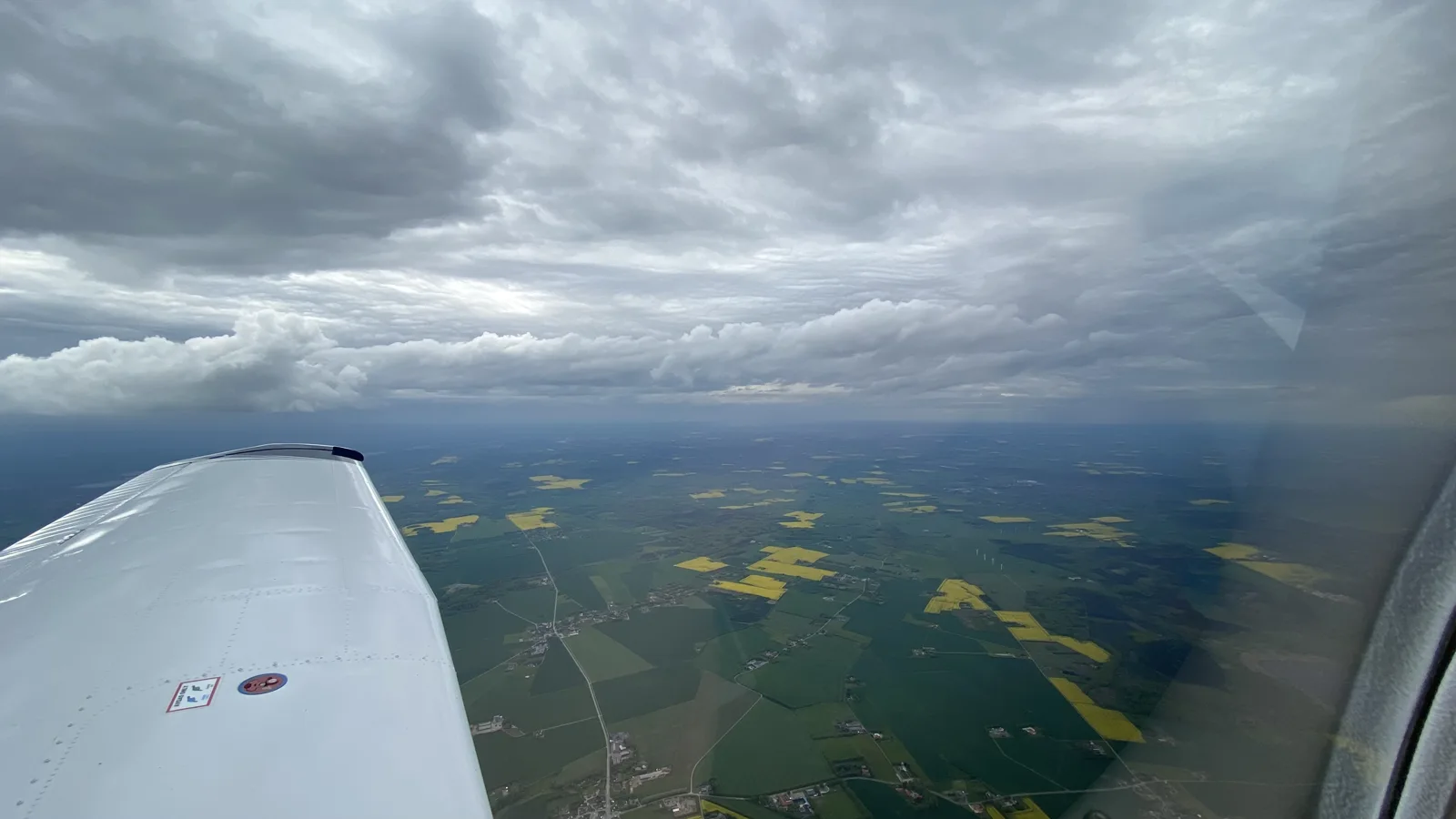
Sæby Flyveklub has its own instructor and works with Sindal Flyveklub on ground school.
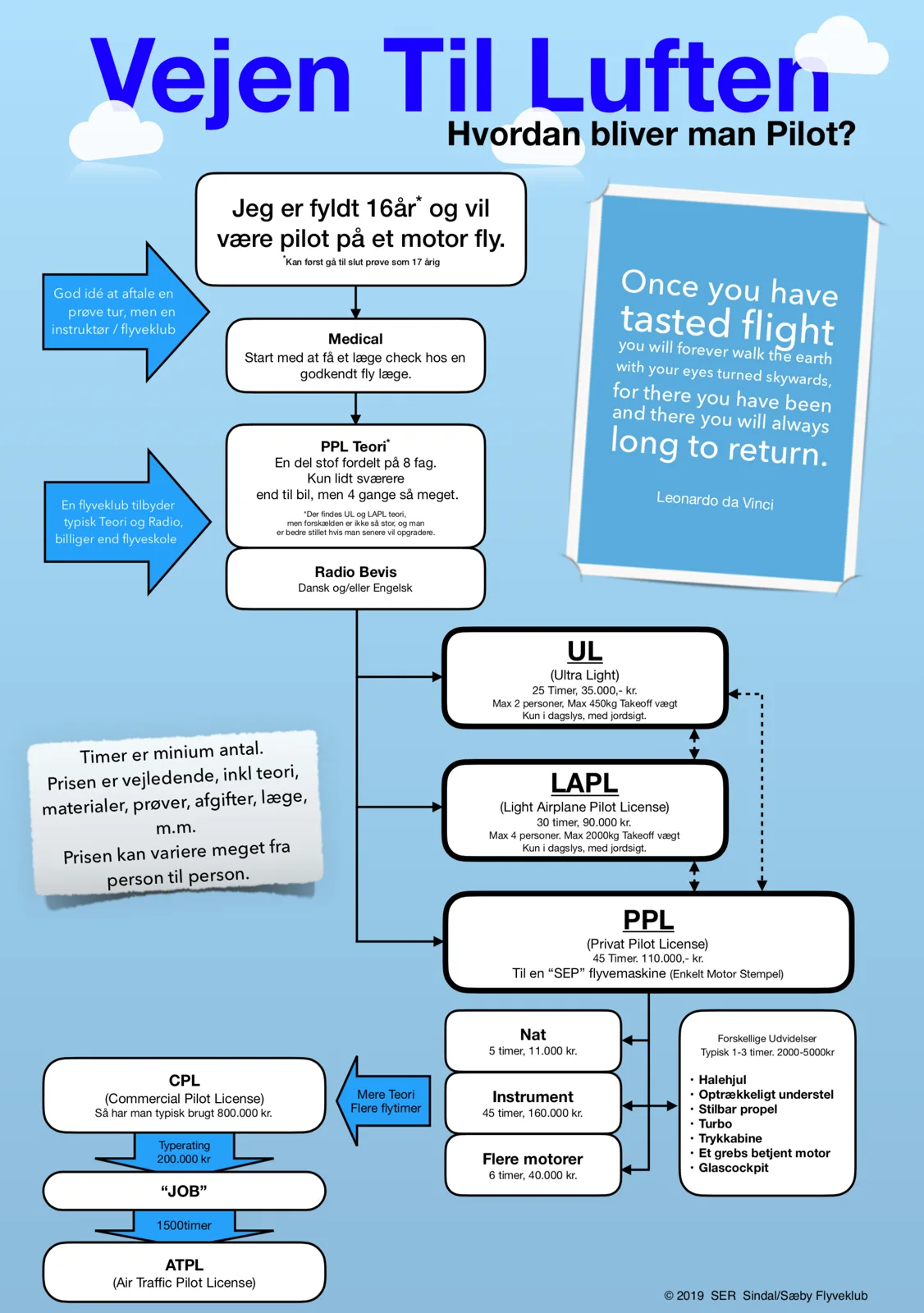
The theory is not difficult, but it is extensive. The course lasts around 130 hours and covers meteorology, aviation law and regulations, navigation, principles of flight, aircraft knowledge, and human performance and limitations. A radio course is also required, either national or international (English).
After successfully completing ground school, practical training can begin. You typically choose the aircraft and licence you wish to train for: PPL(A), LAPL(A) or UL. Training takes place with an instructor in an aircraft with dual controls. The student flies the aircraft, while the instructor can take over using the dual controls. Exercises include landings and airwork to learn aircraft handling, as well as navigation flights to other airports around Denmark. You learn to navigate from the air and consider other air traffic, including private aircraft and large commercial aircraft. The course description specifies a minimum of 45 hours for PPL(A), 35 hours for LAPL (the EASA scheme introduced on 8 April 2013, covering aircraft up to 2,000 kg), and 20 hours for ultralights before the practical test. This can make an ultralight licence less expensive than a traditional PPL or LAPL. The number of hours each student needs varies.
Contact the club for the current training programme and applicable requirements.
Take the first step